Welcome to STEMD Laboratory

BMS (Division of Biomedical Sciences )

KAUST (King Abdullah University of Science and Technology)
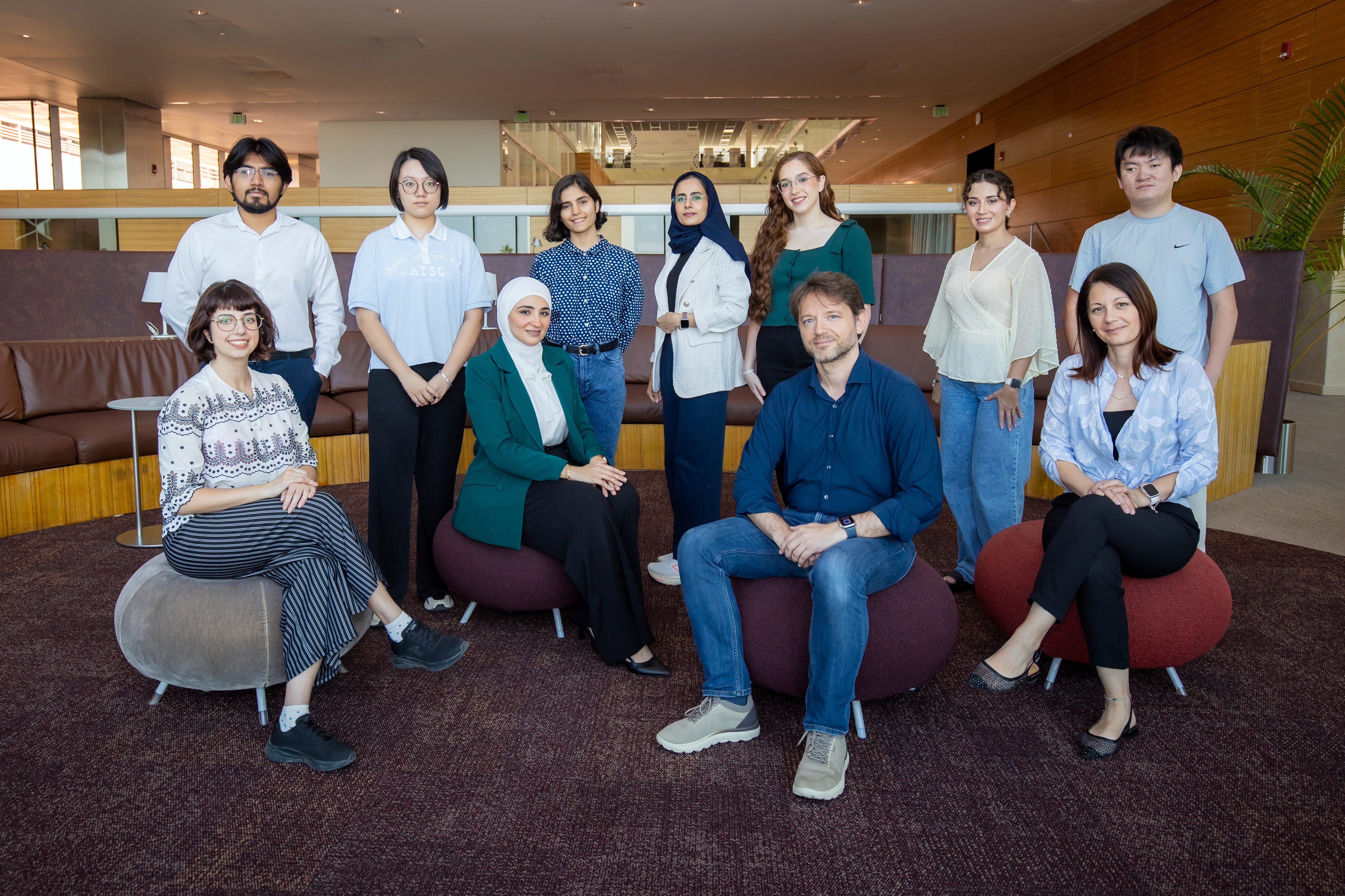
Main light

Overview

The Stem Cell and DIsease Laboratory focuses on the use of human embryonic stem cells (hESCs) and patient-derived induced pluripotent stem cells (iPSCs) to model the onset and progression of human disorders linked to copy number variations “in a dish.” Prof. Adamo's team developed the largest cohort of Klinefelter syndrome (karyotype 47,XXY) and high-grade X aneuploid iPSCs (karyotype 48,XXXY and 49,XXXXY). We use this unique cellular model to study the molecular dysregulations associated with X chromosome aneuploidy during the earliest stages of human development.

Professor Adamo’s team combines reprogramming, organoid derivation, and genome editing techniques with a multi-omics approach to identify the transcriptional and epigenetic signatures underlying human diseases.

Untitled design (7)

We Are Hiring a Lab Technician

We are hiring! Prof. Antonio Adamo’s lab is looking for a Lab Technician to join our team. Position Summary: This is a full-time position at the technician level in supporting STEMD research activities, requiring the ability to work independently and in a team with basic hands-on knowledge/experience with laboratory technical support and organization, which is critical to maintaining lab operations, equipment, and facilities. Major Responsibilities : Perform molecular cloning Derive and maintain stable cell lines. Carry out routine cell culture maintenance, including media preparation and regular media changes. Prepare and coat culture plates with suitable substrates to support cell growth and differentiation. Perform cell passaging (splitting), counting, and seeding to maintain optimal cell density and viability. Other Responsibilities: · Perform routine laboratory tasks if needed, including autoclaving, glassware washing, media preparation, and lab housekeeping, and organizing consumables and reagents · Report any equipment-related issues to the lab manager and support in maintaining the equipment and accessories · Ensuring the laboratory is well-stocked and resourced, spare parts and consumables management for laboratory instruments · Assist in ensuring compliance with KAUST safety guidelines and report any unsafe lab practices · Maintain general safety at lab facilities in compliance with the guidelines of HSE, KAUST Competencies · Should be willing to learn new techniques and things, and be ready to provide support as and when required · Ability to work collaboratively and foster a cooperative work environment · Strong verbal and written communication skills in English.

Please send your C.V to antonio.adamo@kaust.edu.sa.

Latest News

03 September, 2026

Best Practices for Accounting for Biological Sex in (Transcript)OMICS Studies workshop! 🧬🔬

Proud of our team for successfully completing the

Best Practices for Accounting for Biological Sex in (Transcript)OMICS Studies  workshop! 🧬🔬

Read more

02 April, 2026

CRG 2025 Grant Awarded to STEMD Lab

Congratulations to the STEMD lab for being awarded the CRG 2026 grant in collaboration with Prof. RuiLin Tian, SUSTech University."
For the Maxwell material, I only have the flyer for my invitation to give a talk at CSH last December. I am attaching it here if it is useful. "Veronica Astro specializes in the use of patient-derived iPSCs and cortical organoids to study early neurodevelopmental mechanisms underlying sex chromosome aneuploidies." Talk title: Modeling cortical circuit dysfunction in sex chromosome aneuploidies using iPSC-derived cortical organoids.

Read more

02 April, 2026

BESE 398 Graduate Seminar – Prof. Antonio Adamo. March 31, 2026

We were delighted to be invited for the BESE Graduate Seminar, where Prof. Antonio Adamo presented our work titled “From Stem Cells to Disease Avatars: What Can Sex Chromosomes Teach Us on Brain Development.” During the seminar, Prof. Adamo shared our latest findings on how extra X chromosomes influence human brain development using stem cell–derived brain organoids. Our results highlight a striking dose-dependent effect on neural patterning, cortical organization, and neuronal excitability, underscoring the role of gene dosage in neurodevelopment.

We thank the founding Dean of the BioMed Division, Peter Goadsby, for the kind introduction.

Read more